Wednesday, July 08, 2009

The "Stick" is Installed!

The fifth ICON Station is vertical! On July 7-8, 2009, the CREWS/ICON pylon was erected at the pin/plate site offshore of LCRC. Led by CCMI staff member Jon Clamp, a composite dive team of Cayman Islands Department of Environment personnel and local divers secured the Pylon to the previously installed anchoring pins through the use of lift bags and manual methods. Technical advice and training on deployment procedures was provided by NOAA/AOML oceanographer Jules Craynock. Construction divers included D.O.E Keith Neale, Delwyn McLaughlin, Robert Walton, and Wade Moore of Power and Light, Little Cayman. CCMI staff member Lowell Forbes assisted Jon Clamp in the rigging and tensioning of the pylon structure. U/W photographic coverage of the operation was conducted by Myfanwy Rowlands (on a scholarship from the Our World-Underwater Scholarship Society) and CCMI staff member Claire Dell. The pylon was properly secured with a blinking navigation light visible from dusk to dawn and at a distance of rougly 3 nautical miles. Planned Instrumentation installation on the pylon and final transmitting of oceanographic data will be for July 21-23, 2009.

Jules Craynock
Photos by Myfanwy Rowlands

Friday, May 01, 2009

LCYI2 Island Prep


On April 27, 2009 Manuel Collazo of the University of Miami RSMAS Machine Shop and myself, Michael Shoemaker of AOML OCD, began the process of preparing the ICON station designated LCYI2 for installation near the Little Cayman Research Center. Our first step was the transportation of the Pylon from the research station down to the salt dock by flat bed trailer where it would be leaded and staged for deployment. Our next step on April 28 was the installation of the masts which support the navigation light, GOES antenna and the lightning brush. When done with the masts we then tackled the solar panel installation. On April 29 the final part of the preparation was performed which called for drilling out a section at the base of the pylon and mixing 750lbs of lead shot with epoxy resin to fill the ballast chamber at the bottom. We then patched the area with tri-axial Fiberglass cloth and compressed it with peel ply for an overnight cure. Our final day's work on April 30 consisted of removal of the peel ply and painting the section with anti-fouling paint then moving up to the top end of the pylon and applying reflective tape and designator lettering.

Photos by Claire Dell

Wednesday, April 09, 2008

Pins and Plate Installation April 7 - 9, 2008

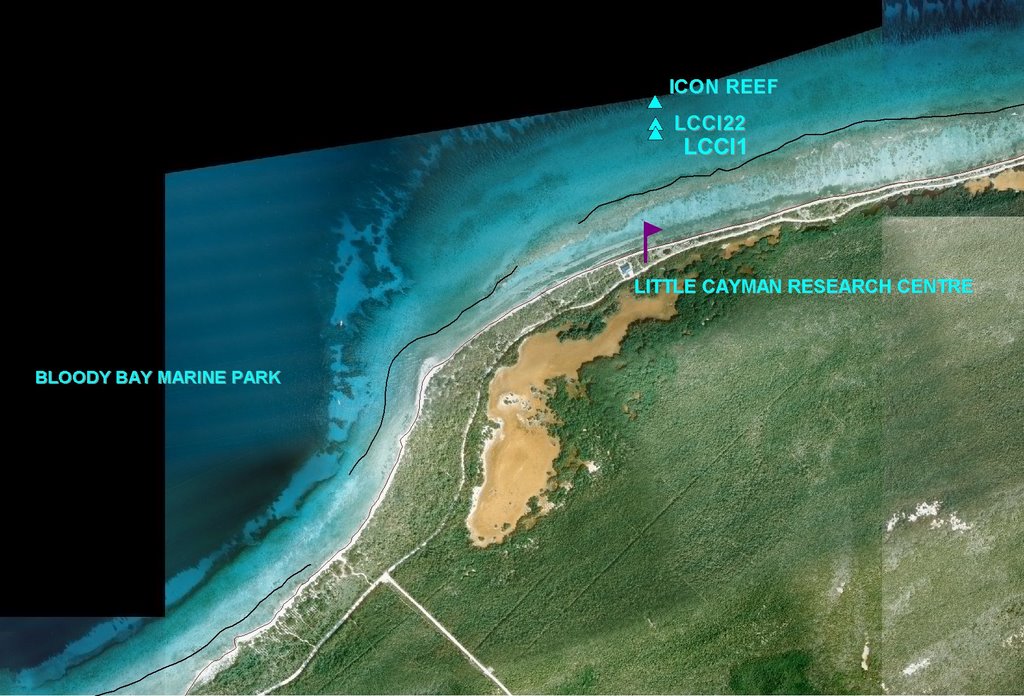
On Monday of this week Jules Craynock and Nancy Ash of NOAA/AOML performed the initial u/w layout of the center base plate and 8 peripheral pins offshore of Little Cayman Research Centre (LCRC). Positioned in hardpan bedrock in the fore reef zone on the shallow terrace that surrounds the island, the pylon will be deployed approximately .25 miles northeast of the LCRC. From an initial base plate position of 19º 41.934’ N, 080º 03.632’ W and a depth of 22 fsw, the peripheral pin positions were marked at a radius of 30ft. around the center base plate position for drilling the next day. Later on Monday the crew of the R/V Sea Keeper arrived at LCCI. The Sea Keeper is operated by the Cayman Islands Department of Environment as a superb, fully capable coastal service vessel. Led by Tim Austin, the crew included Keith Neale and Delwin McLauglin.

On Tuesday, joining the crew for the drilling operation was also Little Cayman Marine Officer Hank Blagen, and Carrie Manfrino and Jon Clamp of CCMI. All participants embarked with calm seas to the offshore site aboard the R/V Sea Keeper. A two- point mooring was used to place the stern of the vessel near to the intended base plate position so that the hydraulic drilling rig could be deployed. After drilling five holes for the 18” base plate pins, 8 holes were then drilled at the peripheral positions to install stainless steel T- pins. After filling the pinning holes with concrete, the base plate was leveled and pinned with stainless steel rods. The peripheral pins were also installed with a concrete fill. Seas remained calm and good conditions enabled rapid progress. Of particular note was the excellent cooperation and great working spirit to be found with our R/V Sea Keeper colleagues.

After allowing the concrete to set overnight, the site was revisited and bearing and depth measurements retaken. The successful installation site was marked with a small orange subsurface buoy.

Posted by Jules Craynock


Fantail briefing before start of operations.


Overhead view of hydraulic drilling rig aboard R/V Sea Keeper attended by Keith Neale.

NOAA Oceanographer Jules Craynock and C.I. Department of Environment Assistant Director - Research and Assessment, discussing the base plate mounting.
Deploying the drill from the R/V Sea Keeper.


Expert Driller, Delwin McLaughin boring 7/8” pilot holes for the base plate installation.

Thursday, November 15, 2007

Memorandum of Understanding

The Memorandum of Understanding between NOAA and the Little Cayman Research Center (Central Caribbean Marine Institute) was finally signed! Construction of the station will soon begin.

Jim

Sunday, June 11, 2006

Site Established


During the week of June 4 - 10, Carrie Manfrino, Jon Clamp, John Halas, Jules Craynock, and I surveyed apparently only two candidate sites that met our criteria. The proposed 20' site is at:

19o 41.929' N

80 o 03.621' W

Or, a 22' site would be at:

19o 41.941' N

80 o 03.625' W

A reef area, tentatively named "ICON Reef" by the CCMI staff, at ~30' to 40' deep, and about 225' oceanward (north) of the 20' site, has apparently high coral and sponge diversity, and is at:

19o 41.972' N

80 o 03.633' W


Also, several sea turtles, groupers and snappers were spotted in the area. The site is almost directly offshore from the Little Cayman Research Center, and just inside the boundary of the Bloody Bay Marine Park area, where incidentally we witnessed some hammerhead sharks, several species of large groupers and schools of yellowtail snappers.

Jim Hendee

Saturday, June 10, 2006

Grouper Spawning Aggregation


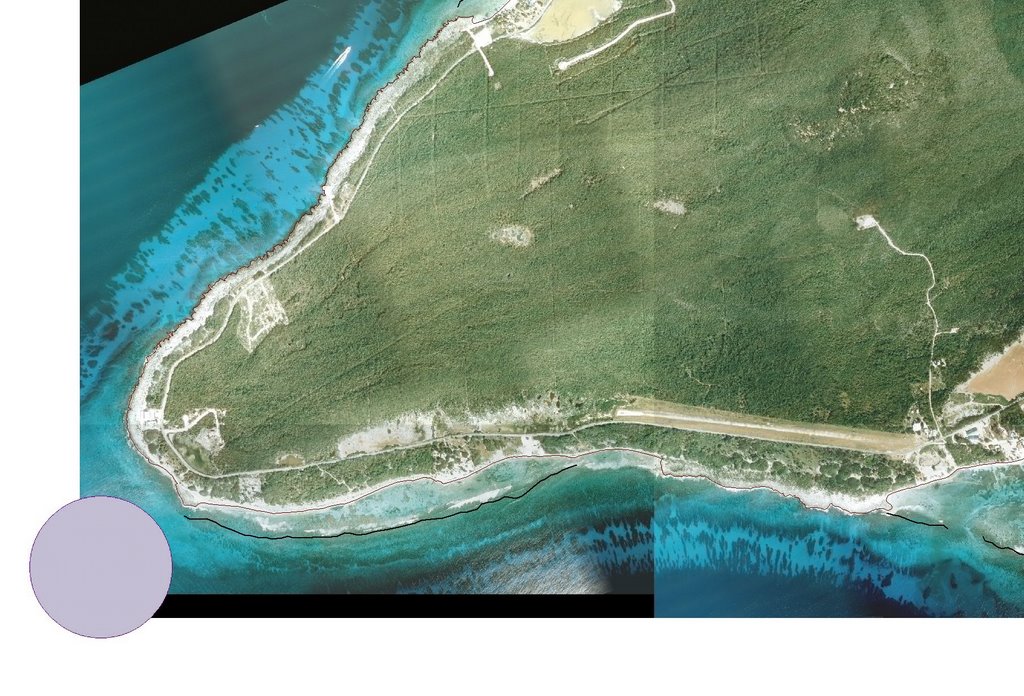
The circled area shows the western side of the island where groupers aggregate for spawning in January near the full moon.